ITV Chase Around The World a format extension, or hanging off the success of BBC's Race Across the World?
The Chase Around The World borrows brand recognition from The Chase and format DNA from Race Across the World. Is that clever risk-managed development, or a rip-off? A format development breakdown.

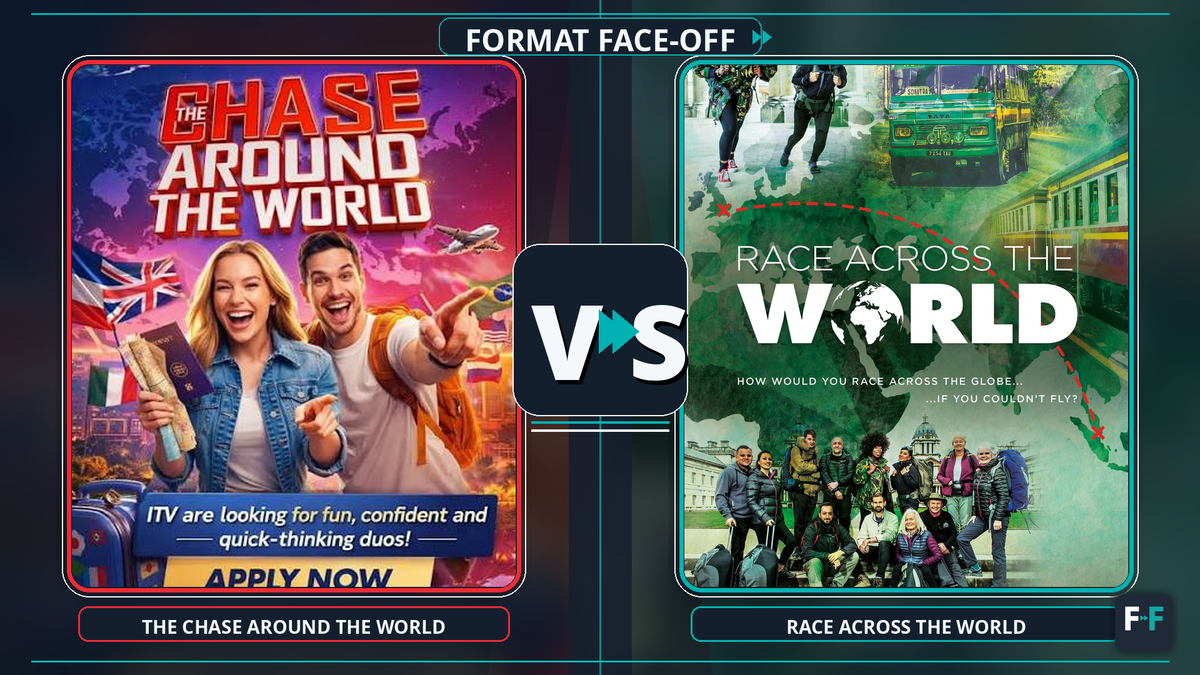
Is The Chase Around The World a Clever Format Extension, or Is It Just Borrowing Race Across the World's Clothes?
TL;DR: The Chase Around The World borrows insurance from two proven hits, The Chase and Race Across the World. Whether that's smart format development or a rip-off comes down to one thing: can it own "pursuit" as its own idea, rather than just wearing someone else's silhouette.
Is The Chase Around The World a clever new format extension, or is it simply hanging off the success of Race Across the World?
That is the uncomfortable development question. At what point does imitation stop being the sincerest form of flattery and start looking like a rip-off?
I do not think that is a cynical question. I think it is exactly the question format developers should ask now, because it sits inside a much bigger shift in the market.
The Market Wants Proof, Not Just a Pitch
I have talked a lot over the last few weeks about proof of concept. The people who pay us to make things no longer just want a good pitch. They want comfort. In some cases, they want something that feels dangerously close to a guarantee of success. They want to know that the audience already understands the behaviour, already likes the shape, already has some appetite for the idea before anyone spends the money to make it.
In other words, it is no longer only the pitch. It is the proof.
Two Insurance Policies
That is why this commission is so interesting. On paper, The Chase Around The World seems to carry two very obvious forms of insurance.
The first is The Chase itself: one of ITV's most reliable shoulder-peak quiz formats, with a proven engine, a strong host, recognisable Chasers and a piece of jeopardy the audience understands instantly.
The second is the travel-race shape made so valuable by the BBC's Race Across the World, a format that has reminded everyone how powerful a stripped-back journey can be when the pressure comes from real travel, limited resources, relationships and time.
So the comparison is inevitable. Contestants moving across the world. A race structure. Clues. Destinations. Pressure. Elimination. Add the Chasers and you have a pitch that probably sells very easily in a room.
But easy to pitch is not the same as fully developed.
The Danger
The danger is that the show becomes Race Across the World with quiz questions attached. If that happens, viewers will see the join. Audiences may not speak in format-development language, but they are highly sensitive to borrowed clothing. They know when a show has taken the silhouette of another success without finding its own reason to exist.
The Opportunity
The opportunity, though, is more interesting. Because the real ownership of The Chase is not simply quizzing. The real ownership is pursuit. The Chaser is not just a clever person answering questions. The Chaser is the threat. The hunter. The thing behind you. The intelligence you have to outrun.
That idea can travel.
If the world becomes the board, rather than just the backdrop, then the format starts to earn its title. Routes, clues, languages, wrong turns, cultural knowledge and time pressure can all become part of the chase. The quiz is no longer only the studio event at the end. It becomes the final expression of pressure built across the journey.
That is when imitation becomes more than flattery. It becomes development.
The Lesson for Format Creators
Commissioners do not only want originality. They want risk-managed originality. They want something new, but they want the audience to understand it quickly. A known brand reduces risk. A familiar genre reduces risk. A simple pitch line reduces risk. Prior audience behaviour reduces risk.
The problem comes when those safety features become the whole idea.
"It's The Chase meets Race Across the World" might get the meeting. It might even get the commission. But it cannot be the format. The format has to answer the deeper questions: what does the audience know, what do the contestants fear, what changes every ten minutes, and why could this only exist under this title?
That is where a spin-off either earns its place or exposes its calculation.
For me, the most interesting version is not: can ordinary people race across the world?
It is: can ordinary people outthink the Chasers when the whole world becomes the board?
This article is written by me, Jonathan Glazier. I'm dyslexic, so AI helps me make it readable. The thoughts and opinions are my own. There are no auto-generated articles, I read and research with rigour.